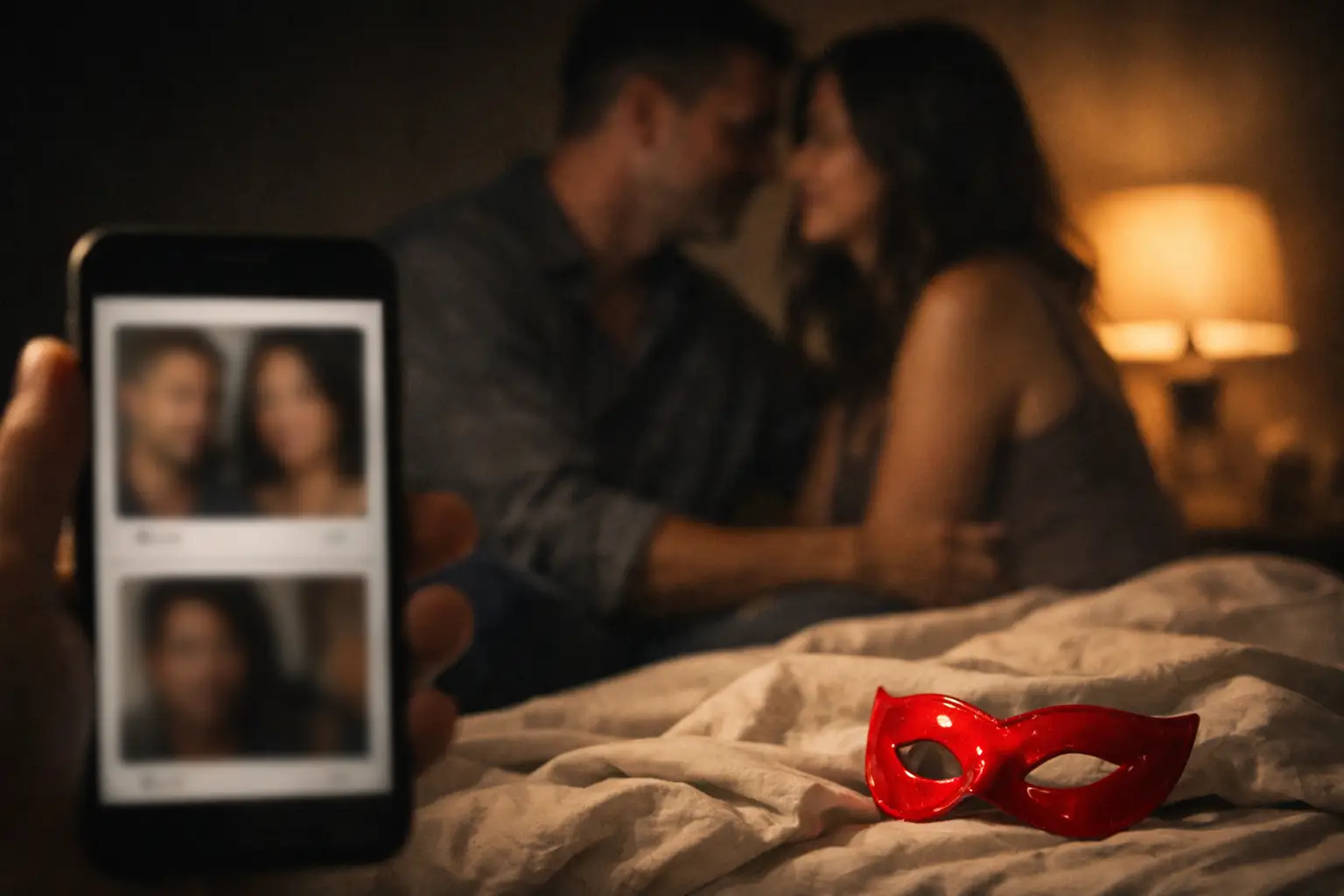
A recognizable face can be the one detail that turns a private interest into an unwanted conversation at work, with family, or in a social circle. That is why do dating profiles blur is such a common question among adults exploring swinging, open relationships, and other ethically non-monogamous connections. In most cases, the blur is intentional. It is a privacy boundary designed to let people participate, browse, and make considered connections without immediately exposing their identity.
Why Do Dating Profiles Blur on Adult Dating Platforms?
Blurred photos create a layer of consent around visibility. On a mainstream social network, a clear profile image is usually expected. In an adult lifestyle space, that expectation can carry a very different level of personal risk. A member may be open with trusted friends or established connections while still keeping their participation private from coworkers, neighbors, clients, or relatives.
For couples, the stakes can be even higher. One partner may have a career, family situation, or public-facing role that requires more discretion. A blurred photo allows both partners to be present on the platform without making either person instantly identifiable to every visitor. It protects the account while leaving room for the couple to decide together who gets a clearer view.
This is not necessarily a sign that someone is hiding something from potential matches. Often, it is the opposite: a sign that they understand consent, boundaries, and the value of sharing personal information gradually. A person can be genuine, respectful, and interested while still choosing not to reveal their face before there is mutual interest.
Blurring Is a Privacy Setting, Not a Measure of Interest
Many platforms blur profile photos for people who are not yet connected. The image may become clear after a like is returned, a friend request is accepted, a conversation begins, or the profile owner approves access. The exact trigger depends on the platform and the member's chosen visibility settings.
That distinction matters. A blurred image does not tell you whether someone finds you attractive, whether they are active, or whether they plan to reply. It only tells you that their current privacy rules do not grant full photo access to you yet.
Healthy adult dating moves at a pace both parties can live with. Someone may want to read a profile, compare boundaries, confirm relationship dynamics, or exchange a few messages before sharing a clear facial photo. This can feel slower than a conventional swipe-based experience, but it often produces better conversations because the first interaction is based on compatibility rather than instant visual access alone.
Privacy Risks That Blurred Photos Reduce
A clear image can be copied, reverse-searched, shared outside the platform, or recognized by someone the member never intended to meet there. No privacy setting can eliminate every risk once an image has been disclosed, but photo blurring limits casual exposure at the earliest stage.
It can also reduce unwanted attention. A visible profile photo may attract messages from people who have not read a profile, do not share the same interests, or disregard stated limits. Keeping images blurred until a connection is mutual gives members more control over who can approach them with a fuller picture of their identity.
For people navigating stigma around ethical non-monogamy, this protection is practical rather than dramatic. They should not have to choose between participating honestly in an adult community and protecting their professional or personal life. Discretion makes it easier for more real people to participate with confidence.
Location Privacy Works the Same Way
Photo visibility is only one part of the equation. Exact location can reveal far more than people realize, especially in smaller communities. A profile may show a broad region, approximate distance, or a manually selected location rather than a precise neighborhood.
When blurred photos and obscured location are used together, members can decide whether there is enough alignment to continue before exposing identifying details. This is particularly useful for couples who attend events, travel, or prefer to keep their lifestyle life separate from their day-to-day routines.
Why Some Profiles Are Clear and Others Are Blurred
Different members have different comfort levels. A clear profile photo can signal that a person is comfortable being visible within the community, but it does not make them more legitimate than someone who chooses limited visibility. Likewise, a blurred photo is not proof that a profile is fake.
The better question is whether the profile provides other credible signals. Look for a thoughtful description, clear boundaries, relationship status, interests, and information that helps you understand what the person or couple is seeking. A profile that communicates respectfully and consistently is generally more useful than a clear photo with no context.
Verification can add another meaningful layer. Identity verification helps establish that the person behind an account is real without requiring them to make every personal detail public. On a privacy-first network such as Aphrodite, verification and selective photo visibility can work together: members can build trust while retaining control over what strangers see.
There is a trade-off. More visibility can make an account feel more approachable and may lead to more initial interest. More privacy can reduce casual attention and protect personal boundaries. Neither choice is universally right. It depends on a member's comfort level, local community size, work situation, relationship agreements, and reasons for joining.
What to Do When You See a Blurred Dating Profile
Start with the written profile. Read what the member says about their relationship structure, interests, boundaries, availability, and preferred style of connection. If the profile suggests genuine compatibility, send a message that reflects what you actually read instead of opening with a request to see their face.
A respectful first message is specific and low-pressure. You might mention a shared interest, acknowledge a boundary they stated, or ask a simple question about what they are hoping to find. This gives the other person a reason to respond without making them defend their privacy settings.
Avoid treating access to a clear photo as something you are owed. Repeatedly asking someone to unblur, send private images, move to another messaging service, or reveal identifying details can quickly undermine trust. If mutual interest develops, many people will choose to share more on their own timeline.
It is also reasonable to know your own preferences. If seeing a clear photo early is essential to you, state that calmly in your profile or move on when a connection does not suit your pace. Compatibility includes communication style and privacy expectations, not only attraction or shared interests.
Signs to Look for Beyond the Photo
A blurred profile can still offer plenty of information for an informed decision. Consider whether the account has a complete description, whether its boundaries are clear, whether messages are consistent with the profile, and whether it uses available trust features appropriately. For couple accounts, it can be helpful when both partners' roles and preferences are explained rather than left vague.
Be cautious with any profile, blurred or not, that pushes for immediate off-platform contact, refuses basic questions, ignores boundaries, or creates urgency around private photos. A clear image is not verification, and a blurred image is not a red flag by itself. Behavior over time is the stronger indicator.
If Your Own Dating Profile Is Blurred
Review the account's photo visibility controls first. You may be able to choose whether images are visible to everyone, only verified members, people you have liked, friends, or accepted connections. Think about who you are comfortable showing your face to before changing a default setting just to attract more attention.
Then make the rest of your profile do some of the work your photo cannot do at first glance. A current but non-identifying gallery image, a well-written description, and clear preferences can help compatible people understand that there is a real person or couple behind the blur. You can be private without being mysterious.
If you are part of a couple, discuss the approach before either partner changes photo settings or shares identifying images. Dual consent is especially valuable when one decision affects two people's privacy. Agree on what can be shared, with whom, and at what stage of a conversation.
Blurred dating profiles are a quiet but meaningful reminder that adult connection works best when visibility is chosen, not assumed. The right match will understand that trust is built through consistency, respect, and mutual permission - not by demanding instant access.