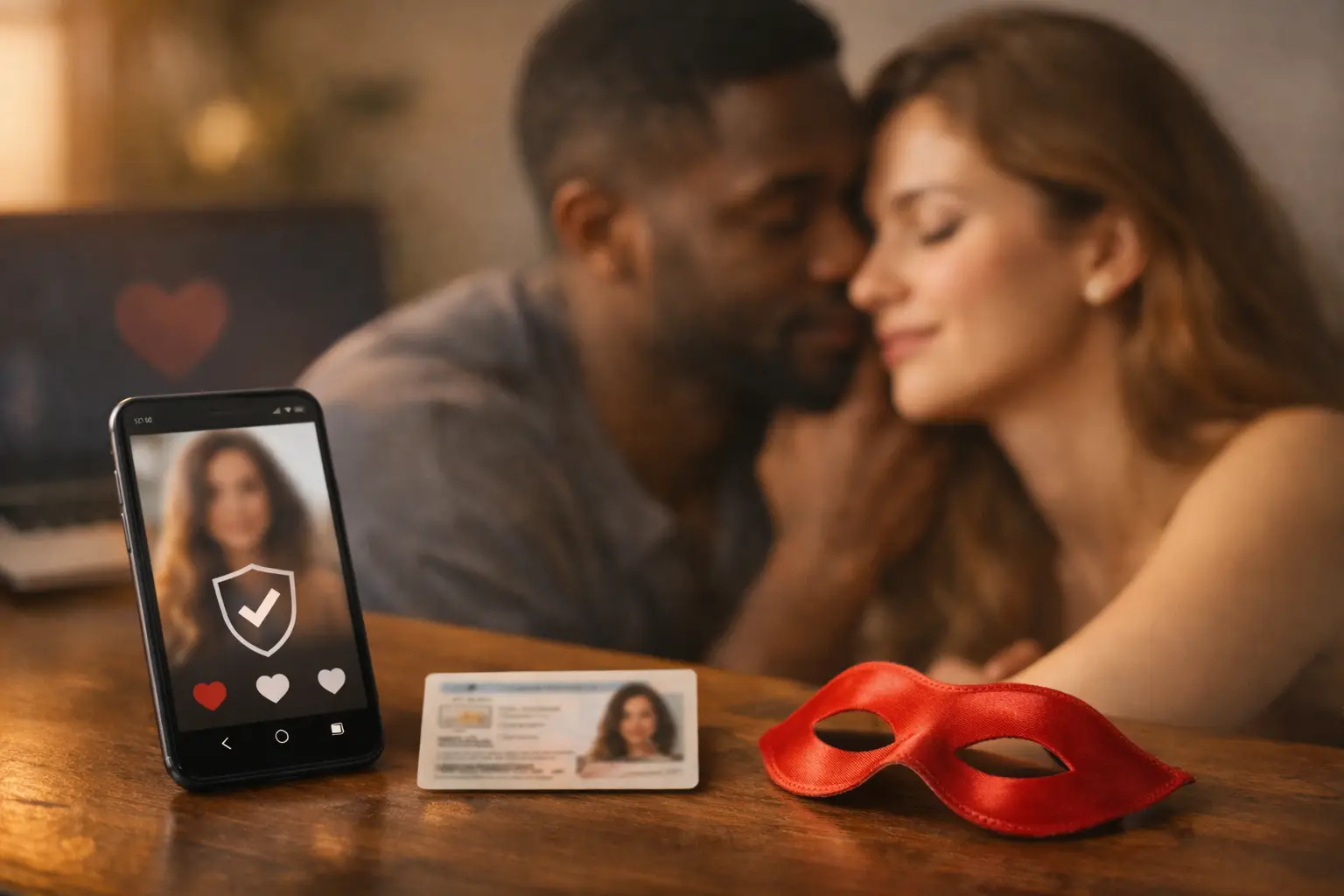
Meeting someone in the lifestyle is rarely just about chemistry. It is also about trust, discretion, and whether the person behind a profile is real. That is why so many privacy-conscious adults ask the same question: is identity verification worth it when you are using a dating or social platform for ethically non-monogamous connections?
For most people, the honest answer is yes - but not blindly, and not on just any platform. Verification adds real value when it helps confirm authenticity without forcing you to give up more privacy than you are comfortable with. In adult social spaces, where fake profiles, misrepresentation, and privacy concerns are common, that balance matters more than almost anything else.
Why identity verification matters more in adult dating
On a generic app, a fake profile is frustrating. On a lifestyle platform, it can be much more than that. It can waste your time, violate your boundaries, create safety concerns, or expose you to people who are not participating in good faith.
That is the real context behind the question. Is identity verification worth it? If your goal is respectful, adult interaction with real couples and singles, verification is not just a convenience feature. It is part of the trust structure.
People in non-monogamous and swinger communities often carry an extra layer of risk. Many want to explore privately. Some are protecting careers, families, or social circles from unnecessary exposure. Others are trying to avoid catfishing, stolen photos, or users who misrepresent relationship status. Verification helps address those concerns because it creates more accountability without requiring users to publicly reveal everything.
What identity verification actually does
Identity verification is often misunderstood. It does not mean every verified person is automatically safe, kind, or compatible. It does not guarantee perfect intentions. What it does is reduce uncertainty around one basic question: is this person who they claim to be?
That distinction matters. Verification works best as one layer of protection, not the only one. A well-designed system can confirm that a member is a real person while still preserving discretion through private profile settings, hidden identifying details, and controlled visibility.
In practice, that means verification can help you filter out some of the most common problems on adult platforms. It can reduce fake accounts, discourage impersonation, and make it harder for people to operate casually behind false identities. It also helps genuine users stand apart from low-effort or suspicious profiles.
Is identity verification worth it if privacy is your top concern?
This is where people hesitate, and reasonably so. If privacy is the reason you chose a more discreet platform in the first place, handing over identifying information may feel contradictory.
The answer depends on how verification is handled. If a platform treats verification like a public badge with little explanation of how your data is stored, protected, or separated from your visible profile, caution is justified. If the process is structured with privacy in mind, verification can actually support discretion rather than weaken it.
That is the key trade-off. You are not deciding between privacy and verification. You are deciding whether the platform is mature enough to support both.
A privacy-first approach gives users ways to confirm legitimacy without exposing personal details to the wider member base. That might include blurred photos for non-connections, hidden identifiers, manual control over location, and secure messaging that keeps conversations private. In that environment, verification becomes part of a broader protective design instead of a demand for unnecessary exposure.
The real benefits of verification on a lifestyle platform
The biggest benefit is not theoretical safety. It is better quality interaction.
When users know there is some level of identity confirmation in place, behavior tends to improve. People are usually more respectful when they understand the space is built for real members, not anonymous chaos. Verified communities often feel more intentional because there is more friction for bad actors and more reassurance for serious users.
That can change the entire experience. Couples can feel more comfortable engaging with singles. Singles can trust that a couple account reflects real partners rather than a misleading setup. Conversations begin with less suspicion and fewer defensive questions. Instead of trying to figure out whether someone is real, you can focus on compatibility, boundaries, and interest.
For people who are new to the lifestyle, this matters even more. A platform with strong verification can lower the emotional barrier to entry. It gives cautious users a reason to participate without feeling like they are stepping into an uncontrolled environment.
Where verification falls short
Verification is valuable, but it is not magic.
A verified member can still be a poor fit. They can still ignore boundaries, communicate badly, or present themselves in a way that technically checks out but does not align with what you want. Verification confirms identity, not character.
That is why it should never replace judgment. You still need to read profiles carefully, pay attention to how someone communicates, and watch for mismatches between stated intentions and actual behavior. A serious platform should support that process with detailed profiles, visibility settings, and compatibility signals that go beyond a badge.
There is also the question of user comfort. Some people are simply not ready to verify immediately, especially if they are exploring discreetly for the first time. That does not automatically make them suspicious. It may just mean they are moving carefully. A thoughtful platform understands this and creates space for layered trust rather than forcing a one-size-fits-all approach.
What to look for before you trust a verification system
If you are asking whether identity verification is worth it, the better question may be this: worth it on what kind of platform?
The strongest verification systems are attached to products that take trust seriously across the board. Verification works best when it sits alongside encrypted messaging, privacy controls, couple-friendly account design, and clear profile boundaries. If the rest of the platform feels careless, verification alone will not fix that.
Look for signs that the system is designed for adults who value discretion. Does the platform explain how it handles privacy? Does it let you control what others can see? Does it support real couple dynamics instead of forcing shared logins or vague account structures? Does it make room for authenticity without turning participation into public exposure?
Those details matter because trust is cumulative. A verification badge means more when it exists inside a platform architecture that respects both safety and privacy.
Is identity verification worth it for couples?
Often, yes - especially for couples who want clarity and control.
One of the most common frustrations in this space is uncertainty around whether a couple profile truly represents two informed partners. Verification becomes more meaningful when it is paired with account features that acknowledge how couples actually use the platform. Independent access for each partner, clearer profile ownership, and transparent account structure can reduce confusion and build confidence before anyone even starts chatting.
For couples, verification is not only about screening others. It is also about presenting yourselves as credible, respectful participants. In a community where authenticity matters, that can improve the quality of the attention you receive.
Is identity verification worth it for singles?
Yes, but the value may show up differently.
For singles, verification can help signal seriousness and reduce the assumption that your profile might be fake or incomplete. That matters when trying to connect with cautious couples or other singles who are screening carefully. It can also make the member directory feel less random and more trustworthy, which improves the odds of meaningful interaction.
At the same time, singles should be selective. Verification should not pressure you into oversharing. If the process feels invasive or the platform does not offer enough privacy protection around your profile, it is fair to pause.
The better way to think about it
So, is identity verification worth it? In adult dating and lifestyle communities, it usually is when it serves two goals at once: proving authenticity and protecting discretion.
That combination is what separates a serious adult network from a chaotic one. Verification should not feel like surveillance. It should feel like structure - one part of a system designed to help real adults meet with more confidence, less guesswork, and stronger control over what they share.
Platforms like Aphrodite.is reflect that shift by treating verification as part of a larger trust-first experience, not a gimmick. For users who care about privacy as much as legitimacy, that is where verification starts to make practical sense.
If you are weighing whether to verify, start with the environment around it. The right platform will never ask you to choose between being real and being discreet.