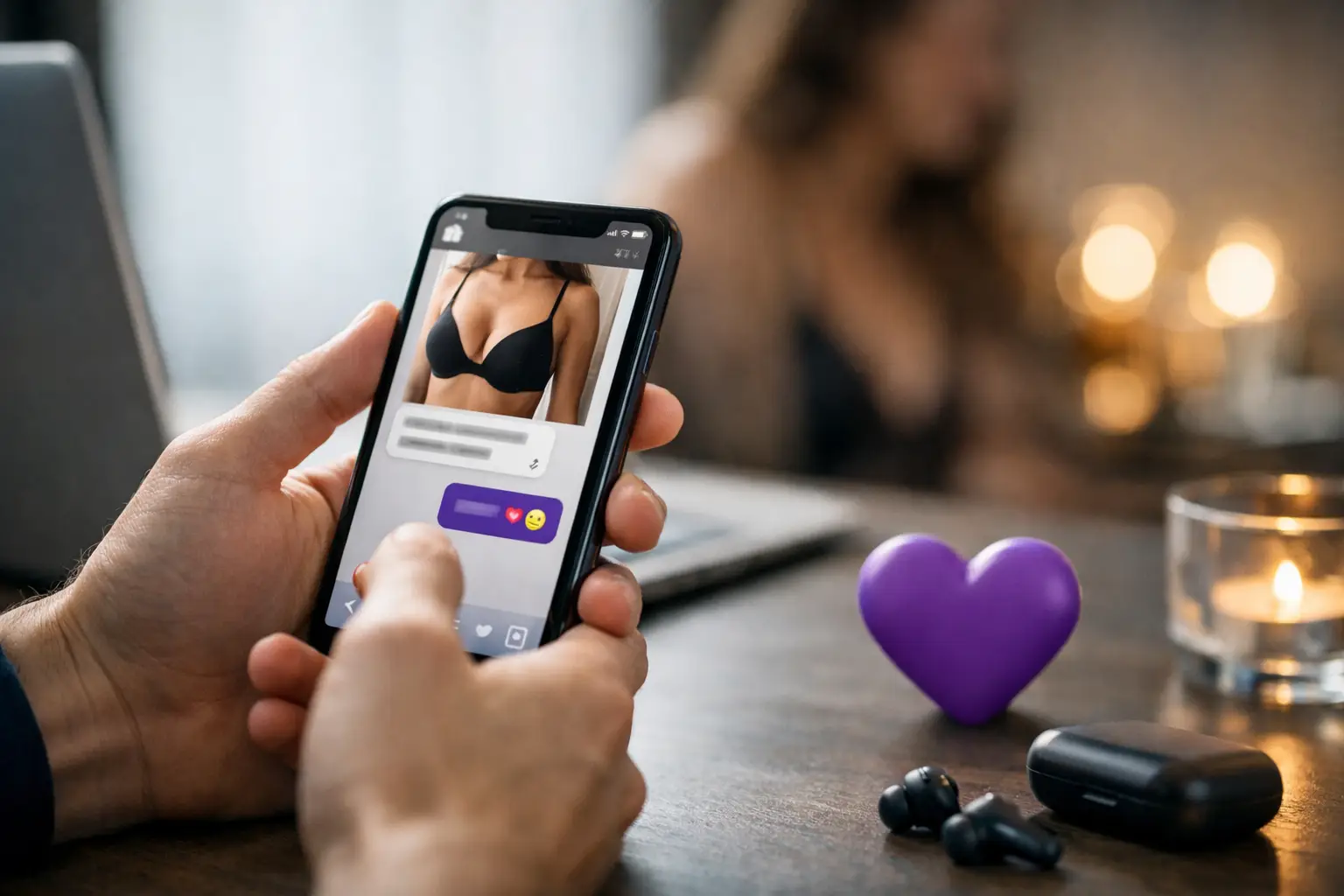
The first message usually decides whether a conversation moves forward or quietly dies in the inbox. On adult platforms, that matters even more because people are weighing attraction, privacy, safety, and intent all at once. If you want to know how to message on adult platforms in a way that gets better responses, the answer is not being bolder. It is being clearer, more respectful, and easier to trust.
That sounds simple, but adult social spaces come with more friction than mainstream dating apps. People may be cautious about exposing personal details. Couples may be reviewing messages together. Verified users often expect a higher standard of communication because they have already made an effort to participate seriously. A good message has to work within that reality.
How to message on adult platforms without sounding generic
Most weak messages fail for the same reason. They ask for attention without showing attention. "Hey sexy," "what are you into," or "you hosting" may feel direct, but they put all the effort on the other person while signaling very little about you beyond availability.
A stronger opening proves that you read the profile and understood the context. If someone says they are new, privacy-conscious, couple-first, or only interested in local social connections, your first message should reflect that. Not with a paragraph of praise, but with one or two specific references that show you are not copy-pasting the same note across the platform.
The best opening messages usually do three things at once. They acknowledge something real from the profile, state your intent in a calm way, and leave room for an easy reply. For example, a couple messaging another couple might say they appreciated the profile tone, mention a shared interest, and ask whether they are currently open to conversation. That is much more effective than jumping straight into explicit questions.
Directness still matters. Adult platforms are not built for endless small talk. But there is a difference between being direct and being abrupt. Direct communication is clear about why you are reaching out. Abrupt communication skips the basic trust-building that makes a reply feel safe.
Start with context, not pressure
People respond better when they understand who they are talking to and what kind of interaction you want. That means your opening should give enough context to lower uncertainty. Are you a single man interested in meeting couples? A couple open to chat first and maybe meet later? Someone browsing carefully and not in a rush? Say so.
This is especially important in communities where expectations vary widely. Some users want flirtation right away. Others prefer a slower exchange to confirm compatibility and comfort. Neither approach is wrong, but assuming your pace is the only pace usually costs you the conversation.
Pressure shows up in subtle ways. Sending multiple follow-ups too quickly, pushing for photos, asking to move off-platform immediately, or demanding details about experience can all make a user step back. On privacy-focused platforms, those behaviors raise concerns fast. If the other person has chosen blurred images, limited location visibility, or a tightly controlled profile, treat those choices as boundaries, not obstacles.
A calm message communicates that you can handle a real conversation. It also suggests that you are less likely to create risk if things continue.
What a strong first message includes
A good first message is usually short. Three to five sentences is enough. Longer can work if the profile invites depth, but most people are deciding whether to reply within a few seconds.
It helps to include a brief greeting, one specific observation, one sentence about your own situation, and one low-pressure question. That structure feels natural because it mirrors how trust forms online. You notice, you identify yourself, then you invite.
The question matters more than people think. Closed questions like "interested?" force a yes or no before rapport exists. Open but simple questions work better, such as asking what kind of connections they are open to right now or whether they prefer chatting on-platform before meeting. Those questions are respectful because they give the other person control over the pace.
Tone matters more than cleverness
A lot of messaging advice overestimates charm and underestimates emotional safety. On adult platforms, the most effective tone is not flashy. It is composed, attentive, and adult.
That does not mean sterile. Flirtation is welcome when it is earned and well-timed. But opening with explicit language can backfire unless the profile clearly invites that style. Even then, there is a difference between mutual chemistry and sexual pressure. One feels exciting. The other feels transactional.
If you are part of a couple, the tone should be even more deliberate. Couple accounts often attract extra scrutiny because people want to know who is actually speaking, whether both partners are involved, and whether expectations are aligned. If relevant, make that clear early. Mention whether one of you is initiating the conversation, whether both of you read messages, and what kind of interaction you are looking for. That clarity removes a lot of unnecessary guesswork.
How to message on adult platforms when privacy matters
Privacy-conscious users read messages through a different lens. They are not only asking, "Am I attracted to this person?" They are also asking, "Do they understand discretion?" Your wording answers that question before you ever discuss meeting.
Avoid asking for identifying details too early. Do not request full-face photos, workplace information, exact location, or personal contact details before trust exists. If someone wants to share more later, they will. Until then, respect the platform's privacy tools and communicate inside them.
This is one reason serious adult networks feel different from open-ended hookup sites. Features like verification, hidden identifiers, obscured location data, and controlled image visibility change the rhythm of interaction. Messaging should match that environment. If a platform is built around trust-first participation, your behavior should reflect the same standard.
For many users, especially couples and professionals, discretion is part of attraction. A message that respects boundaries can be more appealing than one that tries too hard to be seductive.
Common mistakes that hurt response rates
Some messaging errors are obvious, and some are not. Being explicit too soon is the obvious one. Less obvious is being vague. If your message gives no sense of who you are, what you want, or why you chose that profile, the recipient has to do too much work to respond.
Another mistake is treating everyone like they use the platform for the same reason. Some are there for social connection and community first. Some are open to events. Some want private one-to-one or couple-to-couple conversations. If you flatten those differences, your message can feel careless even if it is polite.
There is also the issue of pacing. A warm reply does not mean instant intimacy. Let the conversation build. If the other person is responsive, you can gradually move from general compatibility to preferences and boundaries. Skipping straight to logistics or explicit detail often breaks momentum rather than speeding it up.
Finally, do not confuse low response with personal rejection every time. Adult platforms often have users who are selective, busy, partnered, cautious, or only active occasionally. A non-response might mean no interest, but it might also mean bad timing. One thoughtful follow-up later is reasonable. More than that usually works against you.
Good messaging is really expectation-setting
The most successful conversations on adult platforms tend to feel easy because expectations were set well from the start. People know who they are talking to. They understand the tone. They know whether the interaction is casual, exploratory, social, or leading toward a possible meet.
That does not require a script. It requires consistency between your profile, your message, and your behavior. If your profile says respectful and discreet but your messages are impatient, people notice. If your profile suggests genuine interest in the lifestyle but your opening lines feel mass-sent, people notice that too.
On a platform like Aphrodite.is, where trust features are part of the experience rather than decoration, users tend to reward communication that feels equally intentional. Verified participation, couple-friendly account structures, and privacy controls help reduce uncertainty, but your messages still have to do their part.
A good message says, without overexplaining, that you are real, respectful, and capable of handling adult conversation with maturity. That is what makes someone feel comfortable replying.
If you want better outcomes, stop trying to impress the inbox and start trying to reduce friction. The right person usually does not need a perfect line. They need a reason to feel safe enough to answer.