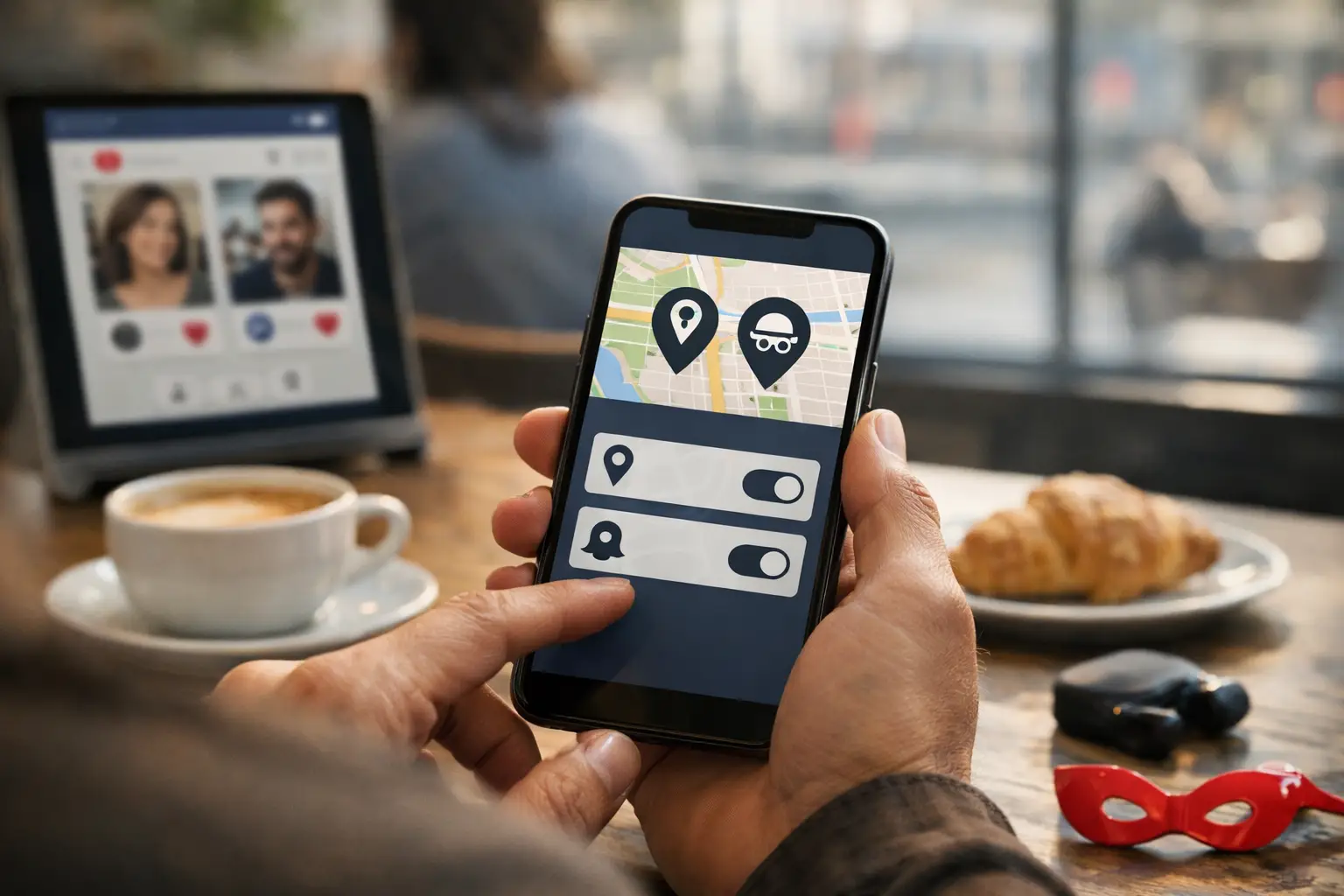
A dating profile can reveal more than a name and a few photos. A precise distance badge, a recognizable neighborhood, or a photo taken outside a familiar venue can make it easier than intended for someone to narrow down where you live, work, or spend time. Learning how to hide dating location is not about being secretive with people you trust. It is about deciding when, how, and with whom location details are shared.
For adults exploring swinging, open relationships, or other ethically non-monogamous connections, that control carries extra weight. Discretion protects not only your own privacy, but also your partner, family, work life, and local community. The goal is not to disappear from the people you want to meet. The goal is to remain discoverable on your terms.
Why Dating Location Privacy Deserves Attention
Location features are useful because they reduce the distance between online conversation and real-world plans. They can also create an information trail. Even when an app does not show an exact address, a distance range can change as you move. Over time, a persistent stranger may be able to infer your neighborhood, commute, workplace, or regular social spots.
This risk is not limited to map pins. Your profile text may mention a local gym, a niche employer, a nearby club, or an upcoming event. Photos can reveal landmarks, street signs, apartment views, team logos, and even identifying metadata if the platform does not remove it. Small details become more meaningful when they are combined.
For couples, location privacy also needs to be a shared conversation. One partner may be comfortable saying they are in a particular metro area, while the other prefers a broader region. Neither preference is wrong. What matters is agreeing on the level of detail your shared profile should provide before someone else sees it.
How to Hide Dating Location Without Ending Connections
The best approach is layered. A single privacy setting helps, but it should be supported by profile choices, messaging boundaries, and thoughtful plans for meeting in person.
Use a broader area, not a precise point
If your platform allows manual location settings, choose a city, metro area, or nearby larger community rather than your residential neighborhood. This gives compatible people a useful sense of travel distance without creating a direct line to your front door.
There is a practical trade-off. A location set too broadly may lead to conversations with people who are farther away than expected. For many privacy-conscious members, that minor inconvenience is worth it. You can clarify general distance later, once there is mutual interest and a respectful exchange.
Avoid describing your location with details that defeat the setting itself. If your profile says "near downtown" and your photos show the view from a distinctive building, your chosen privacy level may not hold up. Keep your written location general and consistent with the level of visibility you want.
Control who sees your photos and profile details
A profile image does not need to be public to be effective. Blurred photos for people outside your connections can create a useful first layer: others can see that a real person or couple is present, while your face stays reserved for mutual interest.
Review each image before uploading. Check the background for house numbers, vehicle plates, workplace badges, children’s items, recognizable landmarks, and reflections in mirrors or windows. A photo can be attractive, natural, and revealing without giving away an identifying setting.
It also helps to separate what is appealing from what is identifying. You can share your style, your energy, and what you are looking for without posting the patio where you host friends every weekend or the café you visit every morning. Save those personal details for later conversations with verified connections.
Make privacy part of your profile boundaries
A clear profile can prevent awkward requests before they arrive. You might state that you share precise location details after mutual conversation, that you prefer to discuss logistics privately, or that you do not host on a first meeting. This is not cold or evasive. It is a reasonable boundary.
The right people will understand that privacy is part of responsible participation. Someone who pushes for your neighborhood, home address, workplace, or live location before trust is established is giving you useful information about their judgment. You do not need to negotiate with pressure.
A concise boundary also helps avoid confusion. People looking for a genuine connection can decide whether your pace works for them. That is better than sharing too much early just to keep a conversation moving.
Protect Location Details in Messages, Too
Privacy settings cannot account for what you reveal in conversation. It is easy to send a casual message such as "we are five minutes from that bar" or "I work across from the stadium" without considering how it connects to other profile details.
Start with broad references. Say you are on the north side of a city, in the surrounding suburbs, or within reasonable driving distance of an event. Once you have built rapport, confirmed compatibility, and feel comfortable with the person or couple, you can narrow the conversation to a general meeting area.
Encrypted direct messaging adds an important layer of protection for private conversation, but encryption does not replace judgment. A message can still contain information you may later wish you had held back. Treat personal details as something earned through consistent, respectful communication.
For couple accounts, decide who handles logistical details and when. Dual access is useful, but it is still wise to align before either partner shares a general area, phone number, or plan. A short check-in protects both partners from accidental oversharing and keeps the experience collaborative.
Choose First Meetings That Preserve Privacy
A first meeting does not require giving someone your home address. Choose a public, neutral venue with easy transportation options, and arrange the details close to the time of the meeting rather than days in advance. If the plan changes or the conversation takes an uncomfortable turn, you retain more control.
For lifestyle events, share only the information needed for the other person to arrive. You can meet near the entrance, in a public lounge, or at another agreed-upon point rather than using your home as a starting location. If you attend with a partner, make sure both people know the plan, the exit option, and the boundaries for the evening.
Trust should develop through actions, not urgency. Verification, profile consistency, respectful communication, and mutual boundaries are stronger signals than someone claiming they are "too far away" to meet anywhere except your place.
Use Verification and Privacy Controls Together
Location privacy works best when it is paired with signals that help you assess whether someone is genuine. Identity verification can reduce uncertainty without requiring you to disclose more than you are ready to share. You can focus on compatibility, boundaries, and conversation rather than trying to prove who is behind every profile.
On a privacy-first platform such as Aphrodite, obscured geolocation, controlled profile visibility, verification options, and encrypted messaging are designed to work together. None of these features should pressure you into moving faster. Instead, they create room to make deliberate choices while remaining open to real connections.
Before becoming active, take a few minutes to review what your profile reveals to strangers, connections, and people who view you in a directory. Check your photos, profile language, visibility preferences, and location setting from the perspective of someone who knows nothing about you. Then consider what they could learn after seeing your profile repeatedly over several weeks.
Privacy Is a Boundary, Not a Barrier
You do not have to trade discretion for connection. The most compatible people are often the ones who recognize why a broad location, a blurred photo, or a slower move toward meeting can be a sign of care rather than disinterest.
Keep your location general at first, let trust build through verified and respectful interaction, and share more only when it supports a plan you genuinely want. The right connection will make room for that pace.