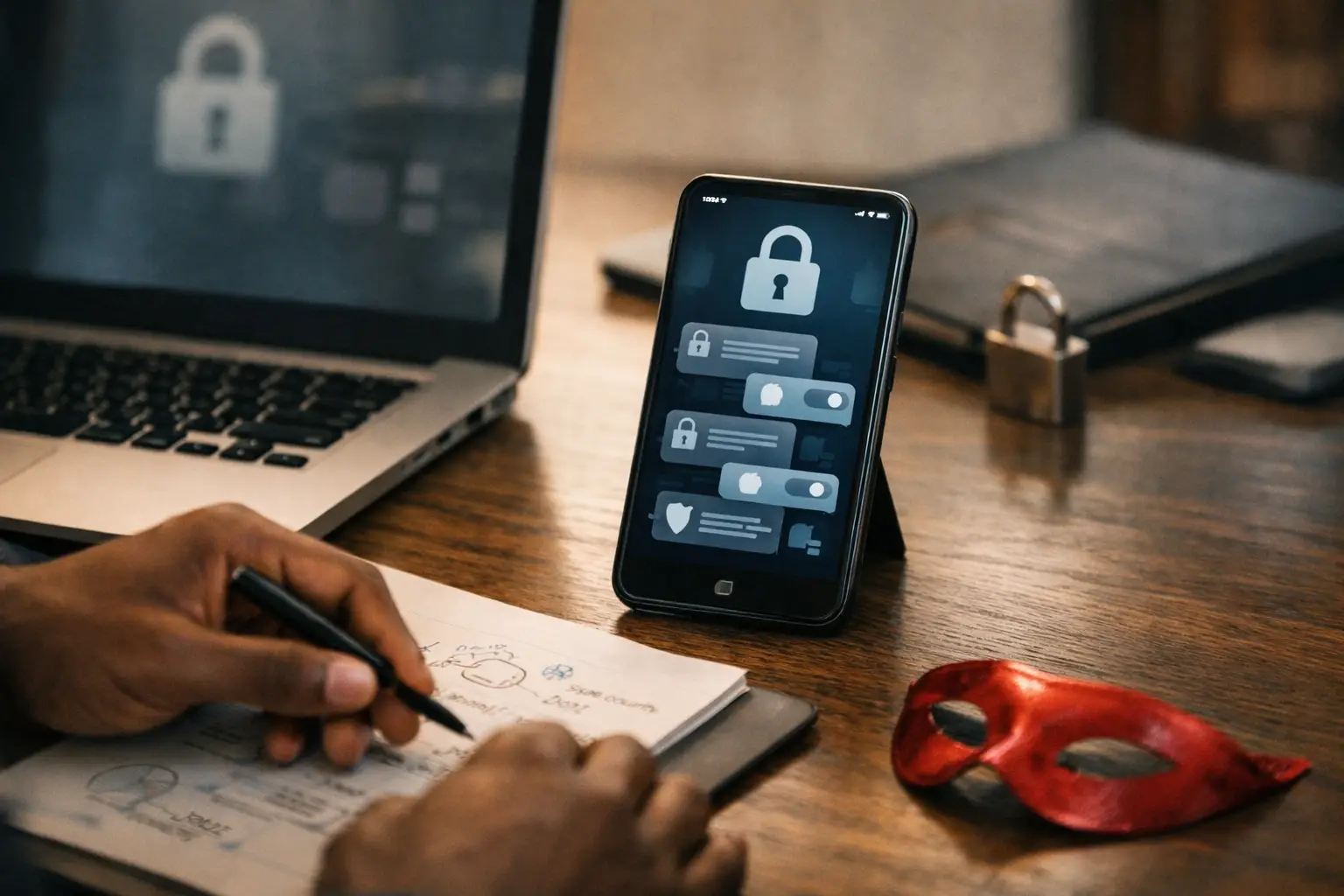
A private conversation can become deeply personal quickly, especially when it involves relationship agreements, photos, location details, or plans to meet. A guide to encrypted adult messaging should begin with that reality: privacy is not an optional feature for adults exploring swinging, open relationships, or other consensual connections. It is part of the foundation for communicating with confidence.
Encryption protects the content of a conversation from being read in transit or stored in readable form by the service hosting it. But privacy is broader than encryption alone. The people in the chat, the security of their devices, the information shared, and the boundaries agreed to all shape whether a message stays private in practice.
What Encrypted Adult Messaging Actually Protects
End-to-end encryption means a message is encrypted on the sender's device and decrypted only on the intended recipient's device. The platform carrying the message should not be able to read the conversation itself. This matters in adult communities because private chat often contains sensitive details that would feel inappropriate or unsafe if exposed.
A strong encrypted messaging system protects the text, media, and calls supported within that conversation. It reduces the risk that someone intercepting network traffic can view what was sent. It also limits how much a platform can access if its systems are targeted.
That protection is meaningful, but it has limits. Encryption cannot prevent a recipient from taking a screenshot, saving an image, forwarding details manually, or leaving an unlocked phone open. It cannot repair poor judgment, override a partner's boundaries, or turn an unverified profile into a trustworthy person. Think of it as an essential private channel, not a guarantee about human behavior.
Why the Signal Protocol Matters
Some adult platforms use messaging built on the Signal protocol, a widely respected approach to end-to-end encryption. Its design is intended to protect message content while also regularly changing encryption keys during a conversation. That helps limit the impact if a key were ever compromised.
For users, the practical point is simple: the platform should not treat private adult conversations as content to inspect, monetize, or casually access. A privacy-first network should explain its protections plainly and avoid vague claims that confuse encrypted transport with true end-to-end encryption.
Privacy Starts Before the First Message
The safest message is not just encrypted. It is sent to the right person. In adult dating and lifestyle spaces, fake accounts, copied photos, and rushed conversations can create avoidable risk before a chat has even developed.
Look for identity verification that gives members a credible reason to believe the person behind a profile is genuine. Verification does not promise compatibility or good character, but it creates useful accountability. It can also reduce the time spent wondering whether a profile is real.
Profile privacy controls matter here, too. Blurred photos for people outside your connections, hidden personal identifiers, and obscured location details allow you to decide what becomes visible and when. If a platform offers manual location settings, use them thoughtfully. A nearby city or general area may be enough early on. Your home, workplace, daily routine, and precise travel plans are not first-message information.
For couples, privacy has another layer. Both partners should have independent access to the account rather than sharing one password or relying on a single person to relay every conversation. Dual-login couple accounts make it easier for each partner to participate directly, review discussions, and stay aligned without sacrificing account security.
Set the Tone for Respectful Private Chats
Encrypted messaging creates a confidential space. It does not remove the need for consent, clarity, or basic social awareness. The most productive conversations are direct without being presumptive.
Start with what you have actually read in the other profile. A thoughtful note about shared interests, relationship style, or event plans is usually better than a generic comment about appearance. It signals that you understand this is a community of adults with preferences and boundaries, not a numbers game.
When the conversation becomes more personal, say what you are looking for and what you are not looking for. Couples may want to explain whether both partners participate in chat, whether they meet separately, and how they prefer to handle invitations. Singles can be equally clear about their comfort level, availability, and expectations. Specificity prevents many mismatches that encryption cannot solve.
Consent applies to messages and media, not only in-person interaction. Ask before sending explicit photos or videos. Do not assume a flirtatious exchange is permission to escalate. If someone declines, changes the subject, or stops responding, respect that signal without pressure or repeated follow-ups.
Treat Shared Media as Sensitive by Default
A private photo can still be saved, screenshotted, or viewed by someone nearby. Before sending any media, consider whether it includes identifying details such as a face, tattoos, house numbers, work badges, children's items, mail, recognizable landmarks, or metadata that may reveal where it was created.
It is reasonable to use gradual disclosure. Some people begin with non-identifying photos, then share more only after verification, a sustained conversation, and mutual trust. Others prefer not to share explicit media at all before meeting. Neither approach needs defending. The right pace is the one both people freely agree to.
If you receive private media, treat it as entrusted material. Do not share it with a partner, friend, group chat, or social feed without explicit permission from the person who sent it. For couples, that conversation is especially important. A sender may be comfortable speaking with a shared couple account but still want confirmation that both partners are viewing messages.
Practical Habits That Protect Your Discretion
Good privacy habits are not complicated, but they should be consistent. Start by protecting the device that holds your conversations with a strong passcode and biometric lock where available. Keep your operating system and messaging app updated, since updates often address security weaknesses.
Use a unique password for your adult-community account and enable multi-factor authentication if it is offered. Avoid sending screenshots of chats to people outside the conversation, even when you are seeking advice. If you need to discuss a concern with a partner, be transparent about that possibility before the chat becomes sensitive.
Keep these five checks in mind before sharing more:
- Verify the profile and look for communication that matches its stated boundaries.
- Confirm who is participating when you are messaging a couple account.
- Share general location information before precise details.
- Ask before sending sexual content, and respect a no without negotiation.
- Move toward an in-person plan only when expectations, consent, and safety details are clear.
These habits are not about approaching every interaction with suspicion. They are about giving trust room to develop through consistent behavior rather than urgency.
When It Is Time to Move Beyond Chat
Encryption is especially helpful while you are deciding whether a connection is worth pursuing. Before moving to another app, sharing a personal number, or arranging a meeting, pause and ask what you gain by changing channels. A private adult platform may offer verification, reporting tools, profile context, and encrypted messaging that disappear once a conversation moves elsewhere.
Staying on-platform longer can be a sensible choice, particularly if someone pushes quickly for outside contact, avoids reasonable questions, or refuses to respect stated boundaries. Pressure is useful information. So is inconsistency between a profile, messages, and verification status.
If you decide to meet, keep the first plan simple and mutually comfortable. Confirm who will attend, where you are meeting, and what the evening is and is not intended to involve. A public social setting, a lifestyle event, or a venue where each person can leave independently may suit an initial meeting better than sharing a private address. There is no universal rule, only the need for clear agreement and an easy ability to change your mind.
A privacy-first platform such as Aphrodite.is can provide the protected setting, verification signals, and couple-friendly account structure that make these conversations easier to manage. The real value comes from pairing those tools with thoughtful choices: share deliberately, communicate honestly, and let respect determine the pace.