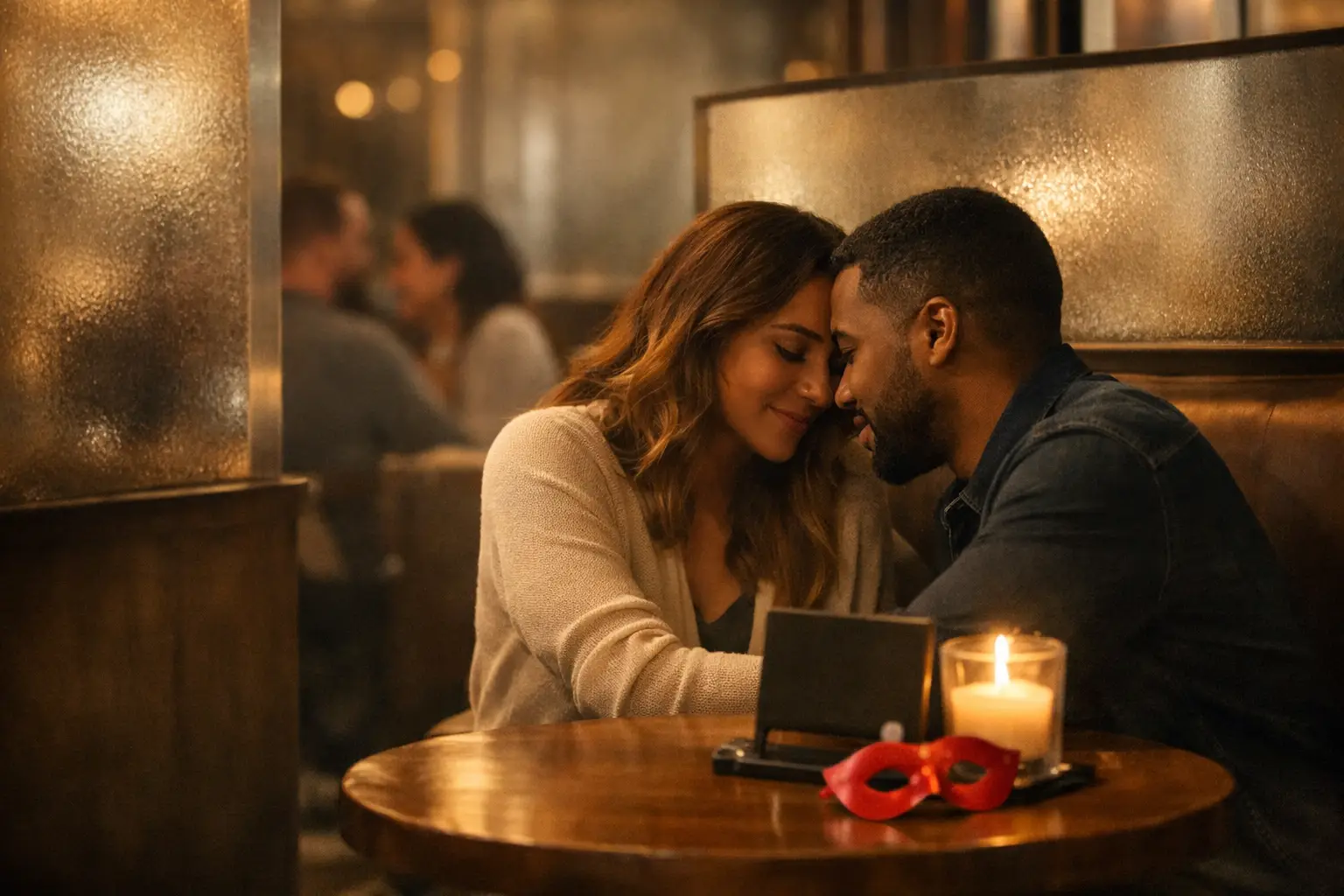
For many couples, the hardest part of opening the door to dating is not chemistry. It is exposure. A shared curiosity can feel exciting in private and risky the moment it touches a public app, searchable photos, or messages stored in plain view. So can couples date with privacy? Yes - but only when privacy is treated as part of the experience, not an afterthought.
That distinction matters more in ethically non-monogamous dating than it does on mainstream platforms. Couples are not just managing attraction. They are managing identity, boundaries, reputation, and the very real possibility of being seen by coworkers, neighbors, family members, or people who do not understand their relationship style. Privacy is not secrecy for its own sake. For many adults, it is what makes honest exploration possible.
Can couples date with privacy online?
They can, but not on every platform and not with every setup. A couple can be fully transparent with each other while still expecting discretion from the technology they use. Those are not competing goals. In fact, they should work together.
The problem is that many dating environments were not designed for couples at all. They often assume one person, one login, one set of preferences, and one public profile. That creates friction right away. One partner may end up managing all communication. Photos may be visible before a connection is established. Location data may be too precise. Even worse, a profile can attract attention from people who are not aligned with the couple's boundaries or intentions.
Privacy-first dating works differently. It gives couples control over who can see them, what they can see, and how they appear before trust is earned. That usually means limited public exposure, stronger identity verification, protected messaging, and account structures that reflect how couples actually date.
What privacy actually means for couples
Privacy is often reduced to one question: can strangers see our photos? That matters, but it is only one layer.
For couples, real privacy usually includes several protections working at the same time. First, identity control. That means deciding whether names, faces, occupations, or recognizable details are visible. Second, location control. A broad region may feel comfortable, while exact distance may not. Third, communication privacy. Messages should not be casually accessible to anyone outside the conversation. Fourth, profile control. Couples need room to define boundaries, preferences, and visibility without exposing more than they intend.
There is also a social layer that gets overlooked. Many couples do not want to be approached by people who treat them like a fantasy rather than real adults with standards. Privacy tools help with that too, because they create a more intentional path to connection. When access is earned rather than automatic, conversation tends to improve.
Why mainstream dating apps often fall short
The issue is not just that mainstream apps are public. It is that their design assumptions are too simple for couple dating.
A couple account should not force one partner to speak for both people. It should not make one person the gatekeeper of every message. It should not expose profile images immediately if the couple wants to ease into visibility. And it should not leave users guessing whether the people contacting them are real.
That last point matters in adult dating spaces. Fake profiles, vague intentions, and inconsistent identity signals create risk quickly. Couples who are privacy-conscious are usually also safety-conscious. They want to know who they are talking to, whether the connection is genuine, and whether their own information is protected while they figure that out.
This is why credibility matters as much as discretion. A private experience without verification can still feel unsafe. A verified experience without privacy controls can still feel exposed. The balance has to be there.
The tools that make private dating possible
If a couple wants to date discreetly, the platform itself has to do some heavy lifting. Good intentions are not enough if the infrastructure is weak.
A strong setup starts with couple-specific account design. Dual-login access is one of the clearest signs that a platform understands how couples operate. Each partner can participate directly, which helps with transparency inside the relationship while keeping the outward profile unified.
Next comes identity verification. In privacy-sensitive communities, verification is not about being intrusive. It is about reducing uncertainty. Couples tend to feel more comfortable sharing selectively when they know the people they meet have also been checked in meaningful ways.
Messaging security matters just as much. If private conversations are part of the journey, those conversations should be protected by real encryption rather than treated like ordinary app chat. That is the difference between a platform that says it values privacy and one that has actually built for it.
Photo visibility controls are another major factor. Blurred images for non-connections, selective gallery access, and customizable visibility settings give couples room to move at their own pace. Some want to show faces quickly. Others prefer to reveal more only after conversation establishes fit.
Location controls deserve equal attention. Obscured geolocation or manual location settings can help couples remain discoverable without becoming identifiable. For many adults, especially those in smaller communities or professional roles with public visibility, that is not a luxury feature. It is essential.
Can couples date with privacy and still be authentic?
Yes, and this is where many people get stuck. They worry that using privacy tools will make them seem guarded, vague, or less trustworthy. In reality, discretion and authenticity are not opposites.
A couple can be honest about what they want, clear about their boundaries, and respectful in conversation while still protecting faces, names, and exact location. Authenticity is about truthfulness, not overexposure. You do not have to reveal everything upfront to be real.
In fact, thoughtful privacy often improves authenticity. When couples are not pressured to overshare immediately, they can focus on what actually matters: intentions, compatibility, communication style, and mutual respect. That creates a stronger foundation than a profile built around maximum visibility.
How couples can protect privacy without disappearing
The goal is not to become invisible. It is to be discoverable on your terms.
A well-built profile should say enough to attract the right people and filter out the wrong ones. That usually means being specific about relationship style, comfort level, boundaries, and the kind of connection you are open to. It does not require posting identifiable details or revealing everything at once.
Couples also benefit from agreeing on an internal privacy threshold before they start. Decide which photos are okay to share publicly, when face pictures can be sent privately, how fast you are comfortable moving to live chat or events, and who handles first contact if both partners are not online at the same time. Privacy works best when it is discussed together, not improvised under pressure.
It also helps to choose spaces where compatibility is part of the system, not something you have to decode manually. When matching is based on preferences, boundaries, and lifestyle interests, couples spend less time fielding irrelevant attention and more time talking to people who make sense.
Platforms built with these protections in mind tend to feel calmer. That is not accidental. When users can verify identities, control visibility, manage profile access, and message securely, the entire environment becomes more respectful.
Aphrodite.is reflects that kind of design with dual-login couple accounts, layered verification, encrypted messaging, and privacy settings that let users control photos, identifiers, and location with more precision than generic dating apps typically allow.
The trade-off: privacy can slow things down
There is one trade-off worth stating plainly. More privacy can mean a slower pace.
If photos are blurred, access is limited, and details are shared gradually, some interactions will take longer to develop. For couples looking for immediate attention, that may feel restrictive. But for couples looking for discretion, safety, and better-aligned connections, the slower pace is often the point.
A fast experience tends to favor visibility. A protected experience tends to favor intention. Neither is automatically better for everyone, but they lead to very different outcomes.
That is why the real question is not simply whether couples can date privately. It is whether they are using an environment that respects the reality of couple dating - shared decision-making, selective visibility, verified identities, and communication that stays protected.
When those pieces are in place, privacy stops feeling like a barrier and starts feeling like what it should have been all along: a condition that lets adults explore with clarity, confidence, and respect.