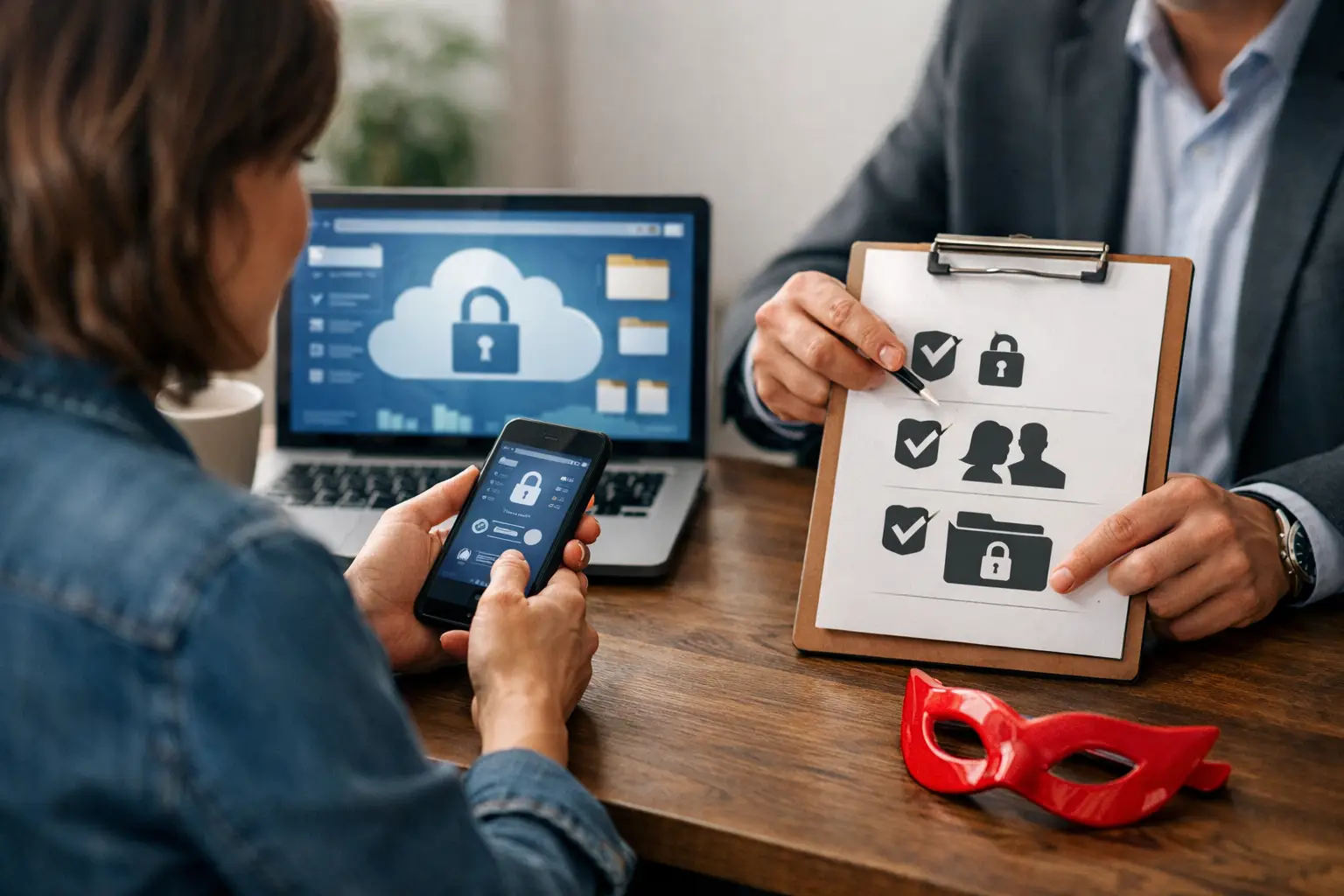
A private gallery can feel like the right middle ground: enough visibility to make a real connection, without putting recognizable photos in front of every passerby. But are private dating photos safe? The honest answer is that they can be safer, not automatically safe. The difference comes down to what the platform protects, who can access the gallery, and how deliberately you share.
For couples and singles in the lifestyle, discretion is not a vague preference. A photo can reveal a face, a home, a workplace, a relationship, or a detail that connects a profile to a public identity. The goal is not to avoid sharing forever. It is to control exposure well enough that you can explore with confidence and make informed choices at every stage.
What “private” should mean on a dating platform
A private photo should not be visible to the entire member directory, search results, or casual profile visitors. At a minimum, it should sit behind a visibility setting you control, such as approval by connection, friend status, or a direct sharing choice.
That said, “private” can mean very different things from one platform to another. Some services simply hide a gallery from public view but allow broad access after a quick interaction. Others give members more granular control over who sees a photo and when. Before uploading anything recognizable, take time to understand the actual audience for each visibility setting.
Private also does not mean impossible to copy. Once another person can view an image, they may be able to screenshot it, save it, or photograph their screen with another device. A respectful community and clear platform rules reduce that risk, but no technology can fully eliminate it. This is why photo privacy should be treated as a combination of platform protections and personal boundaries.
Are private dating photos safe enough to share?
They can be, when the risk matches the level of trust. A blurred public profile image and a clearer photo shared after a thoughtful conversation are very different decisions. The first helps you participate without immediate recognition. The second is a choice to let a specific person or couple see more once their profile, verification status, communication, and boundaries give you a reason to feel comfortable.
The safest approach is progressive disclosure. Share only what is needed to move a connection forward. For some people, that means a face photo after mutual interest. For others, especially professionals, parents, public-facing people, or those new to ethical non-monogamy, it may mean waiting until a video conversation or a planned public meeting.
There is no universal threshold. What matters is whether you have enough information to make a clear, unpressured choice. Anyone who responds to a reasonable privacy boundary with guilt, urgency, or hostility is giving you useful information.
The privacy risks people often miss
A face is not the only identifying feature in a photo. Familiar artwork, a distinctive room, a street view through a window, a work badge, vehicle plates, school logos, and even a recurring social-media style can reveal more than intended. Before you upload, view each image as a stranger would. Ask what they could learn without knowing you personally.
Background details can narrow down your identity
Crop images tightly where possible, and avoid photos taken in spaces that are easy to connect to your daily life. A bedroom or living room may feel anonymous, but unique decor, family photos, mail, screens, reflections, and exterior views can create an unnecessary trail.
It is also wise to remove location metadata from original photos before uploading. Many modern phones attach data to images that can include the place and time they were taken. A well-designed platform may process uploads in ways that limit this exposure, but removing metadata yourself adds another layer of control.
The account behind the photo matters, too
A private gallery is only as private as the account settings around it. Use a unique, strong password and turn on available account protections. Do not share login credentials, even within a couple account. Each partner should have their own secure access so that activity remains clear, consent is respected, and one compromised password does not become a shared problem.
For couples, discuss photo-sharing boundaries before joining. Decide whether either partner can grant gallery access, what kinds of photos are off-limits, and when a connection should be removed. Those conversations are not administrative details. They are part of consent and can prevent difficult misunderstandings later.
Screenshots are a social risk as much as a technical one
Platforms can discourage misuse, set expectations, and act on reports, but screenshots remain possible. Do not send images that would create serious harm if copied. That does not mean assuming the worst about everyone. It means choosing images you can live with, while saving your most identifiable or intimate content for people who have earned deeper trust.
How to share photos with more control
Start with a public-facing image that is useful but not fully identifying. A blurred face, cropped image, or photo that reflects your personality without showing personal details can help compatible people understand your profile while preserving room to choose who sees more.
When you decide to share a clearer image, review the recipient first. Look for a complete profile, consistent details, respectful communication, and identity verification where available. Verification does not guarantee compatibility or good judgment, but it makes it harder for someone to hide behind a completely anonymous account.
Match your photo access to the stage of the connection. If someone is new to you, a limited gallery is usually more appropriate than unrestricted access to every image. If the conversation becomes uncomfortable, if boundaries shift, or if the person’s behavior no longer matches their profile, remove access and end the exchange. You do not need to justify a privacy decision.
Be especially cautious with images that include both partners. A couple photo may reveal more than either person realizes, including relationship status, family context, or identifying details that affect both people. Agree on the image together before it is uploaded, and make sure both partners are comfortable with the selected visibility level.
Platform protections worth looking for
A privacy-conscious adult network should offer more than a hidden album. Look for controls that let you blur profile photos for people you have not connected with, obscure exact geolocation, and keep personal identifiers out of public view. Clear visibility settings make it easier to participate without putting your identity on display from the start.
Identity verification is another meaningful trust signal. It cannot replace judgment, but it helps distinguish real members from low-effort fake profiles and gives conversations a more accountable starting point. For couples, separate login access for each partner is equally valuable because it supports transparency without forcing shared credentials.
Private communication matters after photos are shared, too. End-to-end encrypted direct messaging helps keep conversations private from the platform itself, while reporting and moderation systems create a path to address harassment, impersonation, or boundary violations.
Aphrodite.is is built around this layered approach: blurred photos for non-connections, concealed personal identifiers, obscured location details, individual verification, separate couple access, and encrypted direct messages. These features do not ask members to ignore risk. They give adults better choices about what they reveal, to whom, and at what point.
A safer standard for real connections
The right private dating photo is not necessarily the most revealing one. It is the one that helps you make a genuine connection without giving away more than the moment requires. Use privacy settings intentionally, trust gradual conversations over pressure, and treat every new level of access as a choice you can revisit. Discretion is not a barrier to connection. It is what makes respectful connection possible.